
Mountainscape Theater
A Geological Stage Between Architecture and Narrative
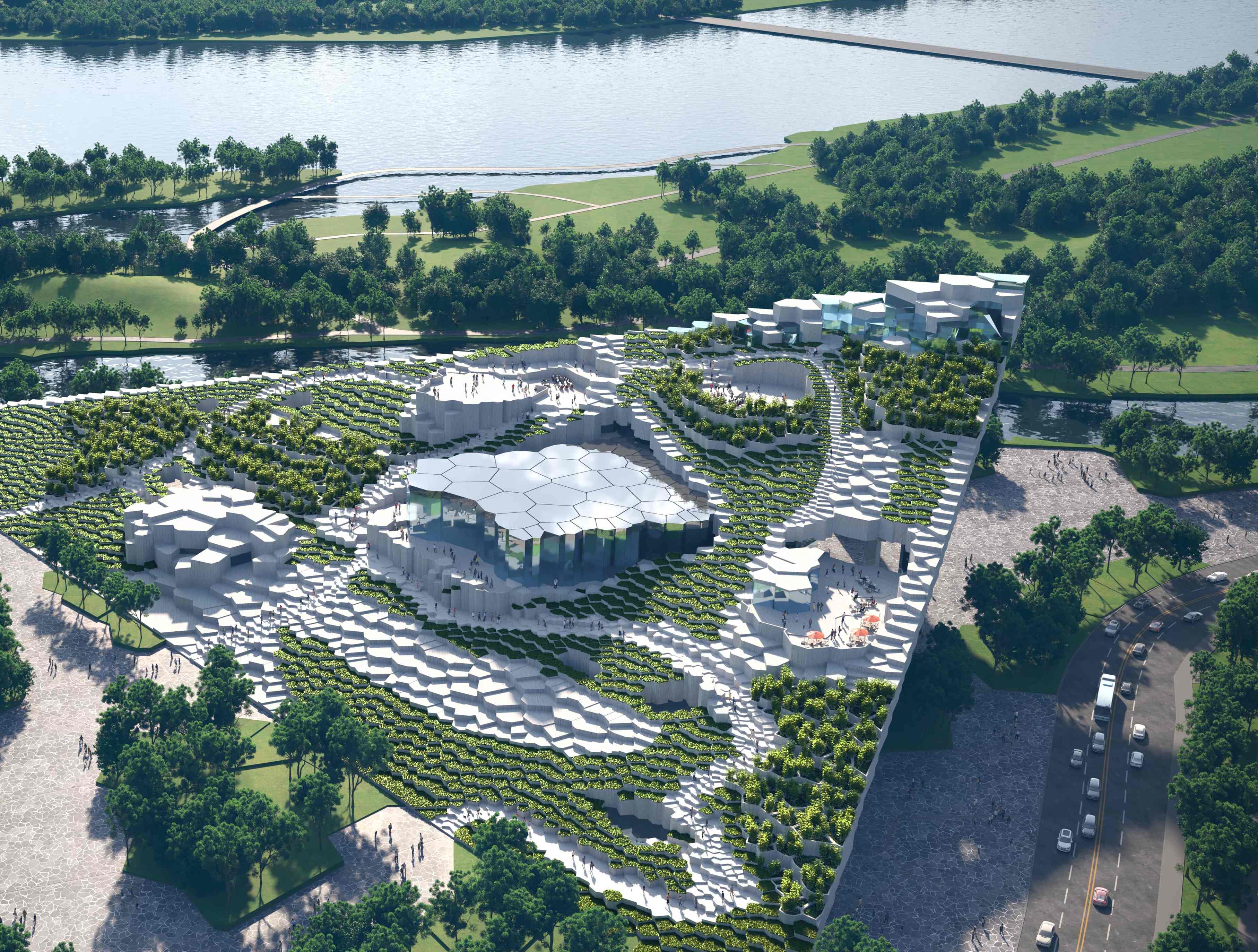
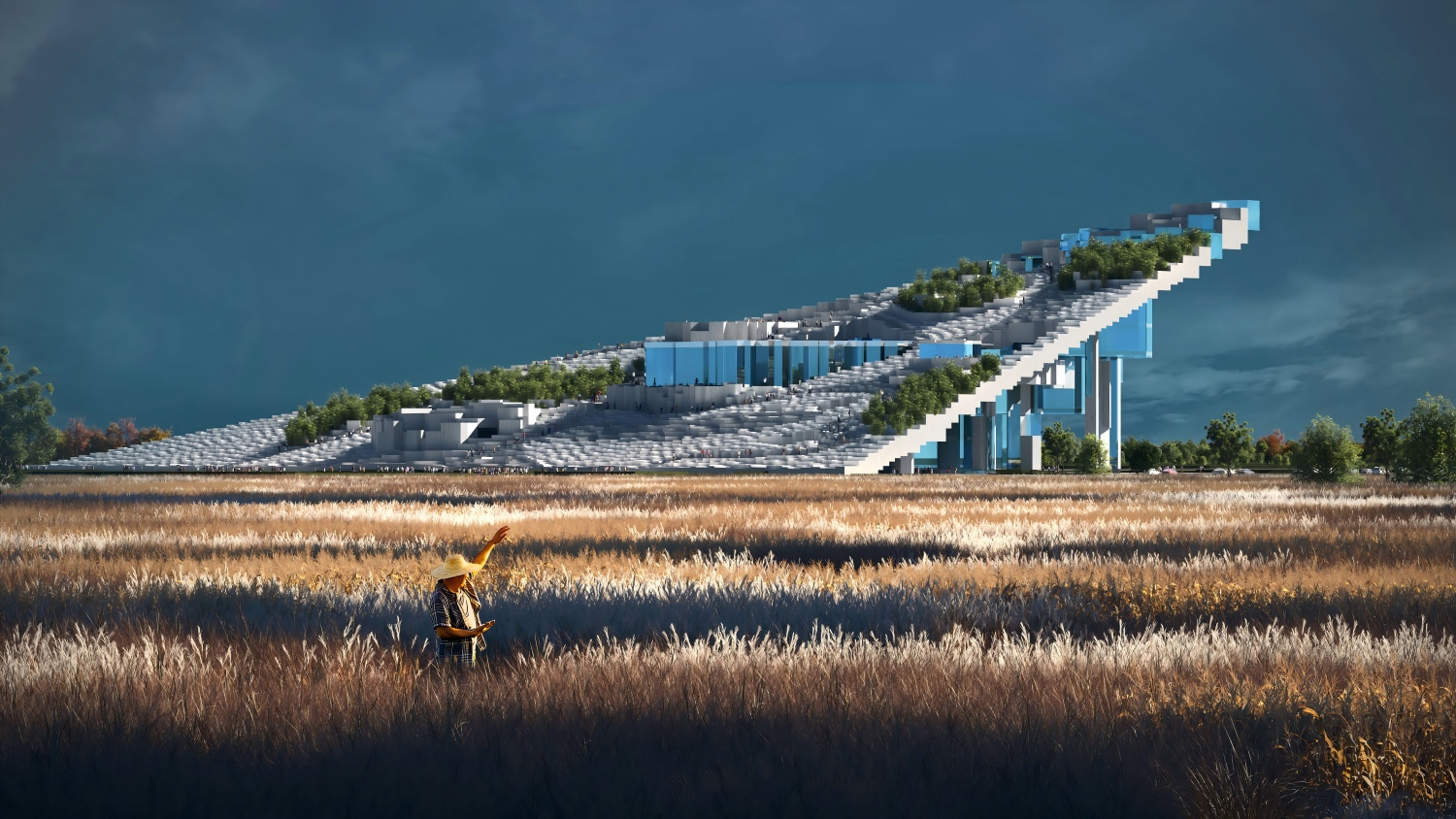
Rooted in the conceptual theme of “mountain and water,” the Landscape Theater is envisioned as a re-formed terrain—an architectural mass lifted from the earth like a fragment of rising crust. Its immense triangular volume emerges from the ground with a decisive tilt, transforming the roof plane into both an extension of the landscape and the prologue of a spatial narrative. From the moment visitors enter, they are drawn into a journey orchestrated by space itself.
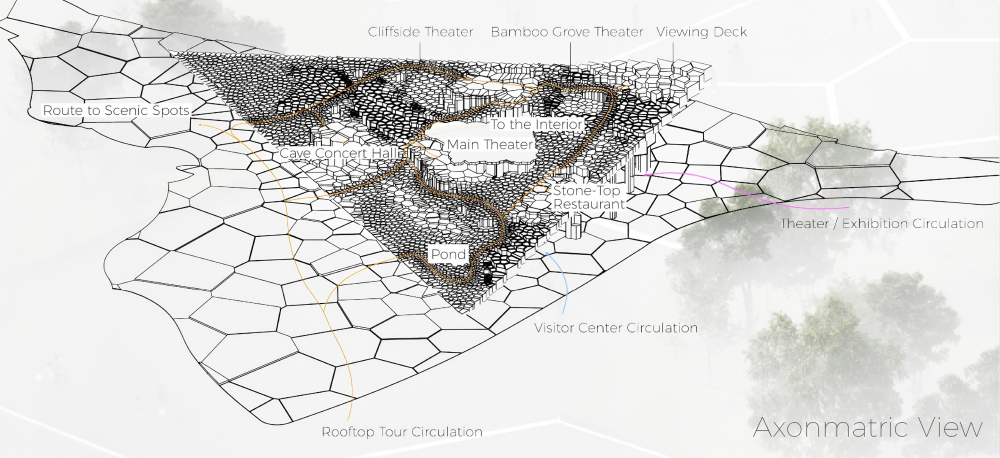
The upturned triangular roof is divided into three winding paths. Without explicit guidance, each visitor instinctively chooses one, embarking on a uniquely personal journey. These routes act as parallel narrative threads, each leading to different spatial episodes. Along the way, caves, pools, bamboo groves, and cliff-like formations appear as if grown naturally from the terrain, turning the visitor into an explorer navigating a mythic, ever-shifting landscape.
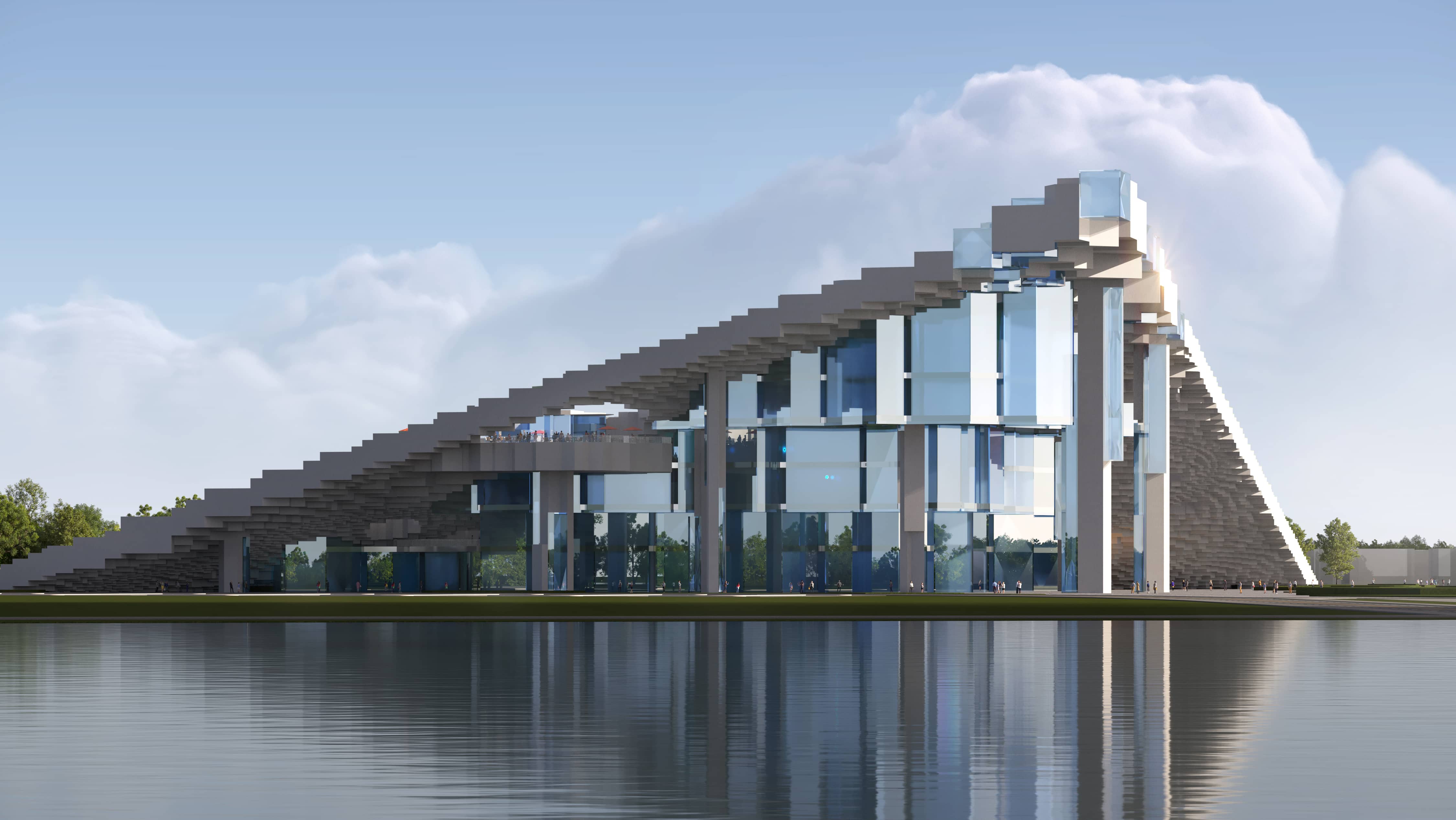
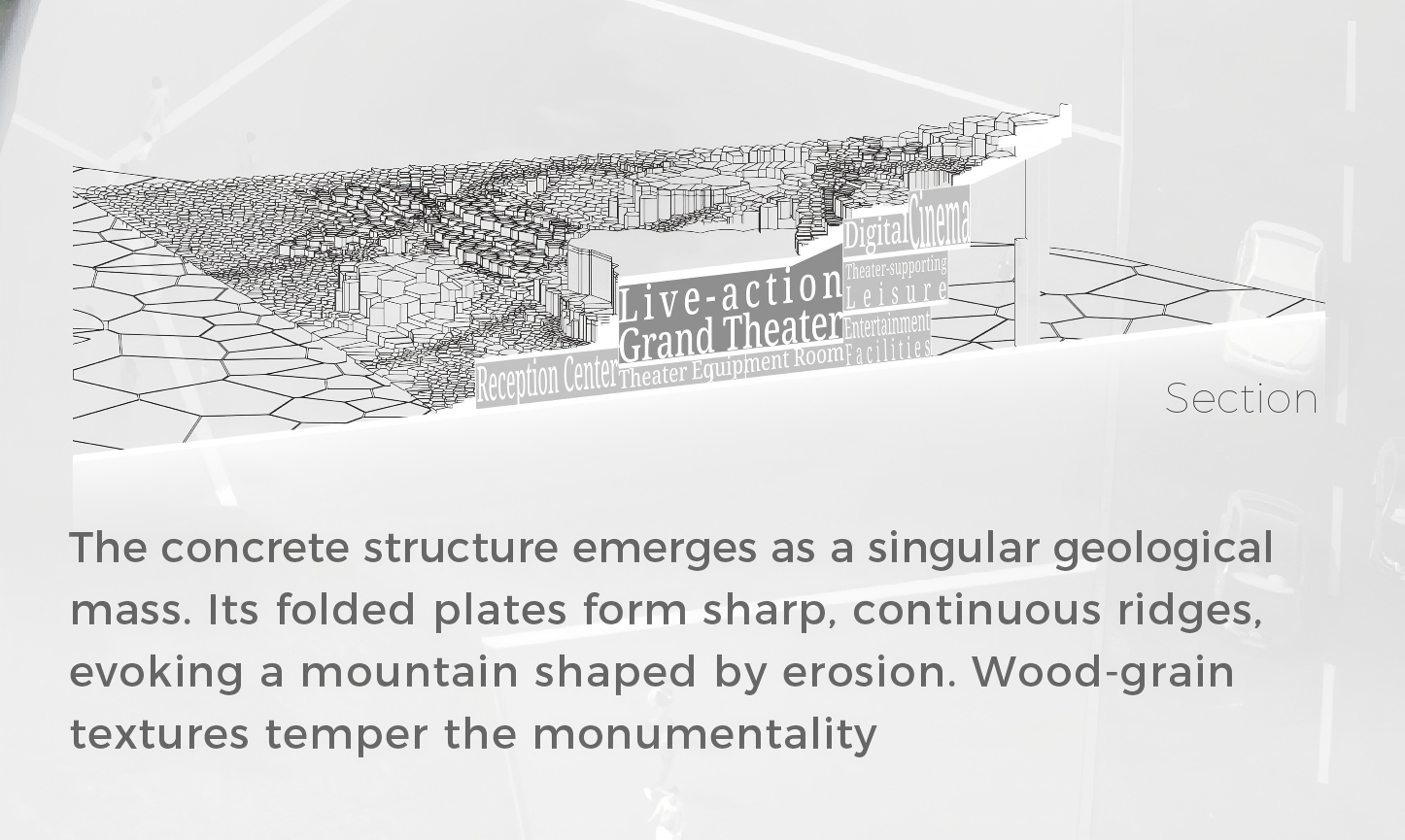
One entire end of the building is lifted 55 meters above ground, generating a vast triangular slope that breaks away from the traditional horizontality of theater design. Instead of spreading outward, the building grows vertically, stacking spatial experiences along a rising axis. At its highest point, the theater reaches 57.5 meters, standing like an urban landform. The roof—an expansive 26,200-square-meter plane—functions not merely as an enclosure but as the very terrain where the theatrical journey begins. Beneath this immense surface, 25,600 square meters of interior program interweave performance, circulation, and support spaces.
On the opposite side of the triangular mass, the building reveals a dramatically different theatrical expression. Reception areas, play spaces, and technical rooms hang from the structure like inverted stalactites, forming a gravity-defying composition. Light filters through their gaps, giving the façade an otherworldly sense of suspension.
The three rooftop paths converge at the heart of the building—the Maze Theater. Here, the concept of “mountain and water” becomes a spatial abstraction. Layered platforms, shafts of light, hidden apertures, and looping circulation intertwine to create a continuously shifting environment. The visitor’s gaze and movement are constantly reframed through changes in level and rhythm, turning the act of viewing into a bodily, immersive experience.
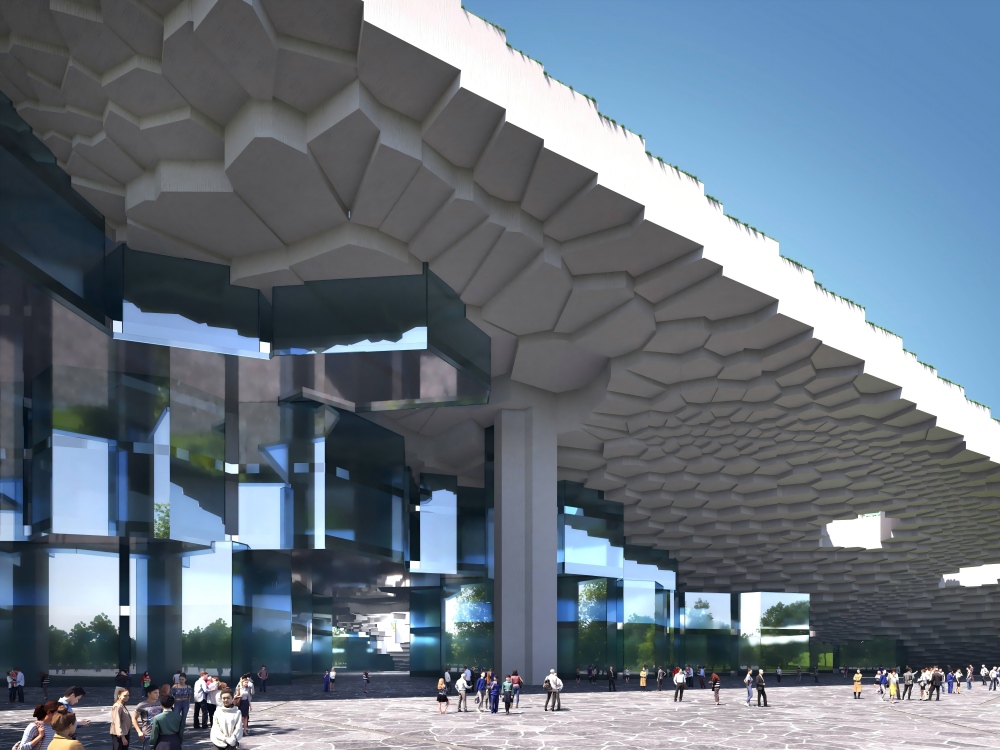
Upon leaving the Maze Theater, visitors step into an immense open-air chamber that unfolds overhead like a celestial dome—a symbolic denouement and a return to the vastness of earth and sky.
Constructed entirely of concrete, the building rises from the ground like a monolithic geological form. The folded-plate structure generates sharp, continuous ridgelines, giving the mass the appearance of a mountain shaped by erosion. Wood-grain formwork textures soften the monumental volume under shifting sunlight, while rain traces fleeting patterns across the folds, lending the structure a slow, elemental rhythm.